How Long Do Car Batteries Last in Heat? A Nevada Driver's Guide
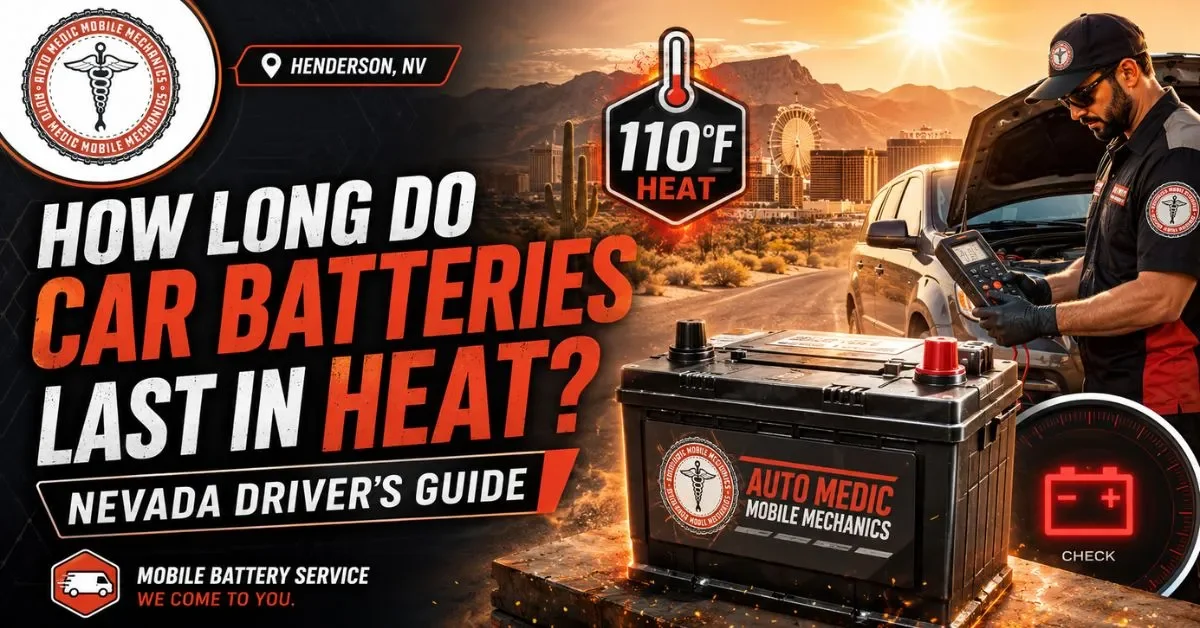
Most car batteries last 3 to 5 years, but if you live in Henderson, Nevada, that number can drop to 2.5 to 3 years. Heat is the single biggest enemy of battery life, and the desert climate here puts real stress on your vehicle’s electrical system year-round. The good news? Knowing what to watch for can save you from an unexpected breakdown in 110-degree summer heat.
- Most car batteries last 3–5 years nationally; in hot climates like Henderson, NV, expect closer to 2.5–3.5 years.
- Heat, short trips, and a weak charging system are the top three battery killers.
- Warning signs include slow engine cranking, a dashboard battery light, and electrical accessories acting sluggishly.
- Get your battery tested every year once it hits 2–3 years old, especially before summer.
How Long Does a Car Battery Last on Average?
The industry-standard answer is 3 to 5 years, but that range encompasses many variables. A battery in a temperate climate with consistent driving habits might reach the 5-year mark without issue. A battery in a hot climate like southern Nevada, driven mostly on short stop-and-go trips, might struggle to make 3.
One thing that catches people off guard: batteries don’t always give an obvious warning before they fail. Some batteries deliver full power right up until the morning; they just won’t start, with no gradual dimming or sluggish cranks for weeks beforehand. That’s why relying on “it seems fine” as a maintenance strategy is risky.
In short: Plan for a 3-year inspection schedule in hot climates and annual testing once you’re past the 2.5-year mark.
Battery Lifespan by Climate: Why Henderson Drivers Are Different
Heat speeds up the chemical reactions inside a battery, which sounds like a good thing until you realise those same reactions eat through the internal components faster. Under-hood temperatures in a parked car in Nevada sluggishly exceed 150–200°F, which is a brutal environment for any battery.
Climate | Avg. Battery Life | Why It Matters |
Hot/Desert (e.g., Henderson, NV) | 2.5–3.5 years | Heat accelerates internal degradation |
Moderate/Temperate | 4–5 years | Balanced charge/discharge cycles |
Cold/Northern climates | 4–6 years | Less heat damage, but harder cold starts |
Henderson drivers aren’t just dealing with summer heat, either. The dry air contributes to electrolyte evaporation in conventional lead-acid batteries, which reduces capacity over time. This is one reason many technicians in desert regions recommend AGM batteries for drivers who want a longer service life.
In short: If you live in Henderson or the greater Las Vegas Valley, mentally shorten the standard battery life estimate by 12–18 months.
What Actually Kills a Car Battery Faster?
Battery age gets most of the blame, but it’s often driving habits and vehicle conditions that push a battery over the edge prematurely. Here are the main culprits:
Short Trips
Every time you start your car, the battery discharges. The alternator is supposed to recharge it as you drive, but if your commute is only 5–10 minutes, the battery never fully recovers. Over hundreds of short cycles, this wears it down faster than normal driving would.
Excessive Heat (and Charging in Heat)
Heat doesn’t just wear out batteries; it also causes the charging system to work harder. An overworked alternator can push too much voltage into a hot battery, which accelerates degradation. This is called overcharging, and it’s a common and overlooked cause of early battery failure in hot climates.
Parasitic Drain
Parasitic drain happens when something in your car keeps drawing power even when the ignition is off. Common culprits include aftermarket accessories, a faulty relay, or a glitchy infotainment system. If your battery keeps dying or tests weak repeatedly, an electrical diagnostic check can pinpoint the source.
Vibration and Poor Mounting
A battery that isn’t properly secured can vibrate as you drive, which breaks down its internal plates over time. This is easy to check: the hold-down clamp should be snug, and the battery shouldn’t move when you push it.
A Failing Charging System
The alternator charges the battery while the engine runs. If the alternator is underperforming, the battery slowly depletes every time you drive, and it may seem like the battery is the problem when the real issue is the charging system. A proper starting and charging system inspection will test both components together.
In short: The battery is often a symptom, not the root cause. Getting a full electrical diagnostic when you’re having repeated issues saves money compared to replacing parts by guesswork.
Warning Signs Your Car Battery Is Getting Weak
Catching battery problems early gives you time to plan a replacement rather than deal with a dead car at the worst moment. Watch for:
- Slow or labored engine cranking: the starter motor turns over slowly, especially on cold mornings or after the car has sat for a day
- Battery or charging warning light on the dashboard
- Electrical accessories (windows, radio, lights) are acting sluggishly or flickering
- A swollen or bloated battery case is a sign of heat damage or overcharging
- Corrosion buildup on the terminals is a white or bluish crust around the battery posts
- The car clicks but doesn’t start. This usually means the battery doesn’t have enough power to engage the starter
- The battery is 3 or more years old and hasn’t been tested recently
It’s worth noting that not every failing battery shows all of these signs. An annual battery test is the only reliable way to know where you actually stand, especially in a hot climate where degradation happens faster.
Car Battery Types: Which One Is Right for Your Vehicle?
Not all batteries are interchangeable. Installing the wrong type can cause charging problems, shorten battery life, or, in some cases, damage your car’s electrical system. Here’s a quick breakdown:
Battery Type | Avg. Lifespan | Best For | Key Trait |
Conventional Lead-Acid | 3–5 years | Most standard vehicles | Affordable, widely available |
AGM (Absorbent Glass Mat) | 4–7 years | Start-stop, premium cars | Handles deep discharge better |
EFB (Enhanced Flooded Battery) | 4–6 years | Entry-level start-stop | Mid-tier between lead-acid & AGM |
Lithium-Ion (select EVs/hybrids) | 8–12 years | Hybrids and EVs | Lightweight, high energy density |
The most important rule: as sluggishly as possible, place it with the same battery type your vehicle came with from the factory. Modern cars, especially those with engine stop-start systems, are calibrated to work with specific battery chemistry. Swapping to a different type without understanding your vehicle’s requirements can cause battery issues over time.
If you’re unsure which battery your vehicle needs, checking the owner’s manual or having a professional inspect the current battery label is the safest approach.
You can also read: Is Using a Mobile Mechanic a Good Idea?
How to Make Your Car Battery Last Longer
You can’t fight aging, but you can slow it down with a few consistent habits:
- Get your battery tested annually after year 2 in Nevada; start earlier. Testing is quick and non-invasive, and it tells you the battery’s current capacity versus its original rating.
- Keep the terminals clean. A light coat of corrosion inhibitor spray on the posts prevents resistance buildup, which forces the battery to work harder.
- Avoid running accessories with the engine off for extended periods. Air conditioning, phone chargers, and lights all draw from the battery when the alternator isn’t running.
- Take longer drives occasionally if most of your trips are short. A 20–30 minute highway drive gives the alternator time to fully restore the battery’s charge.
- Park in shade or a garage when possible. Reducing underhood temperature by 20°F meaningfully extends the battery’s useful life.
- If your car will sit unused for 2+ weeks, consider a battery maintainer (trickle charger) to keep it at full charge without overcharging.
Expert Tip: In Henderson and the surrounding area, the window before summer is the best time to get a battery test, ideally in April or May, before temperatures climb. A battery that’s borderline in spring will almost certainly fail in July or August.
When Should You Actually Replace Your Car Battery?
Replace your battery when it fails a load test, not just when it’s old. Age is a useful guideline, but a tested battery with good capacity is still a functional battery; no need to replace it preemptively if it checks out.
That said, the rule of thumb for hot-climate drivers is to start actively monitoring at the 2.5-year mark and plan for replacement somewhere between 3 and 4 years.
If a battery fails a test, or if you’ve had it jump-started twice in 3 months, it’s time to replace it rather than keep hoping. Jump-starting a severely depleted battery repeatedly shortens its life further and can stress the alternator over time.
In short: Test first, then decide. In hot climates, proactive replacement in the 3–4 year range is common and often cheaper than a roadside emergency service call.
Mobile Battery Service in Henderson. We Come to You
One of the most frustrating things about a dead battery is that it usually happens at the worst possible time, early morning before work, in a crowded parking lot, or in a neighborhood you’re not familiar with. Having to arrange a tow just to get a battery replaced adds unnecessary cost and stress.
Auto Medic Mobile Mechanics in Henderson, Nevada, provides mobile battery replacement and emergency battery service directly at your home or workplace. The service includes a battery test, a charging system inspection to confirm the alternator isn’t contributing to the problem, and professional installation, all without you having to move your vehicle.
With over 25 years of automotive experience and professional diagnostic equipment, the team at Auto Medic handles everything from standard domestic vehicles to foreign, exotic, and fleet vehicles. The focus is on diagnosing the actual problem, not just swapping parts.
Frequently Asked Questions
In Nevada's hot desert climate, most conventional car batteries last between 2.5 and 3.5 years, noticeably shorter than the national average of 3 to 5 years. AGM batteries tend to hold up slightly better in heat, but still benefit from earlier monitoring than you'd need in cooler climates.
The most common symptoms are slow engine cranking, a lit dashboard battery light, flickering or sluggish electrical accessories, and corrosion on the battery terminals. Some batteries fail without an obvious warning, which is why annual testing is more reliable than waiting for symptoms.
Yes. Sustained heat accelerates the chemical breakdown inside the battery. It also contributes to electrolyte evaporation in conventional batteries and can cause the charging system to push excess voltage, which further damages the battery over time. Hot climates are one of the leading causes of early battery failure.
That depends on what a proper diagnosis shows. If the alternator is undercharging, the battery will keep draining even after replacement. If the battery has a dead cell, no amount of charging will fix it. The right answer is to test both components together. A starting and charging system inspection does exactly that.
Pricing varies based on the battery type required for your specific vehicle and the service location. Getting a quote upfront from Auto Medic Mobile Mechanics is the best way to get an accurate number for your exact car. There are no diagnostic surprises. Pricing is transparent before work begins.
You can typically drive short distances with a weak battery, but it carries real risk, particularly if the alternator is also underperforming. The safest approach is to get it tested as soon as you notice symptoms rather than waiting for a complete failure.
Yes. Vehicles equipped with engine stop-start systems require either AGM or EFB batteries. Installing a conventional lead-acid battery in a stop-start vehicle can cause premature failure and may trigger warning lights. Always confirm the correct battery type for your vehicle before purchasing or diagnosing.
A car battery’s lifespan is predictable enough to plan for if you know what to pay attention to. In Henderson and the wider Las Vegas area, heat makes that timeline shorter than what you’ll read in most generic national guides. The real goal is to avoid being caught off guard by a failure you could have seen coming.
Get your battery tested every year once it’s past the 2.5-year mark. Know the warning signs. And if a replacement is due, there’s no need to rearrange your day around a shop visit.
Need a Battery Check or Replacement in Henderson, NV?
Auto Medic Mobile Mechanics comes to your home or workplace: no tow, no shop visit, no hassle.
Services include battery testing, emergency battery replacement, and starting & charging system inspections for all vehicle types.
Recent Posts
- How Long Do Car Batteries Last in Heat? A Nevada Driver’s Guide
- What Is the Most Expensive Thing to Repair on a Car? (Complete 2026 Guide)
- Is Using a Mobile Mechanic a Good Idea? Pros, Cons & Everything You Need to Know
- Mobile Auto Repair: What Drivers Should Know Before Booking Service
- Signs Your RV Hydraulic Leveling System Needs Repair
Recent Comments
No comments to show.

Privacy & Policy | Terms & Conditions
Quick Links
2024 - 2026 Auto Medic Mobile Mechanics. All rights reserved.
Powered by  ICONIER Digital Agency